
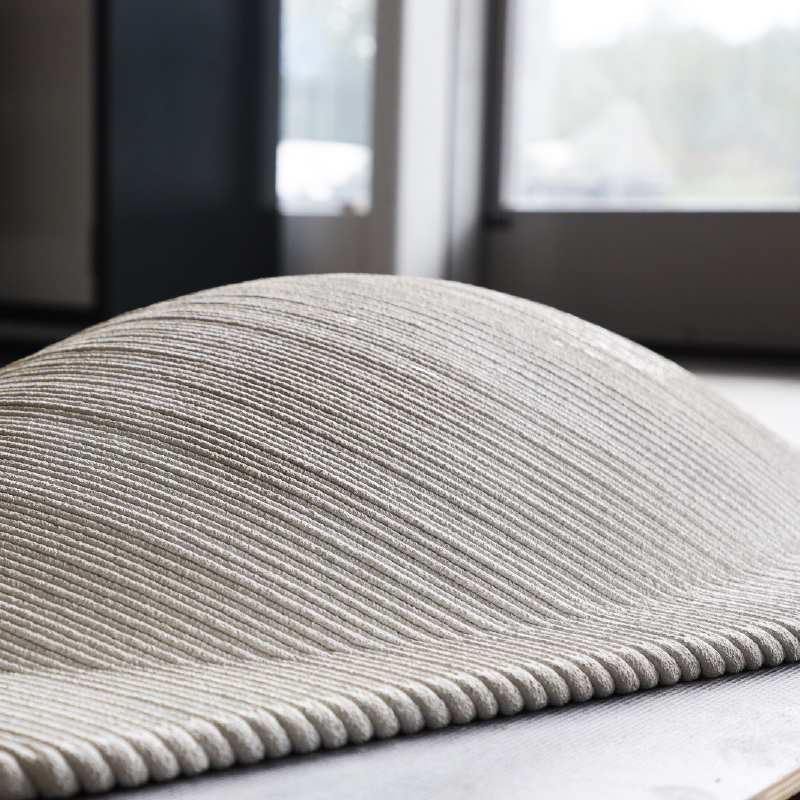
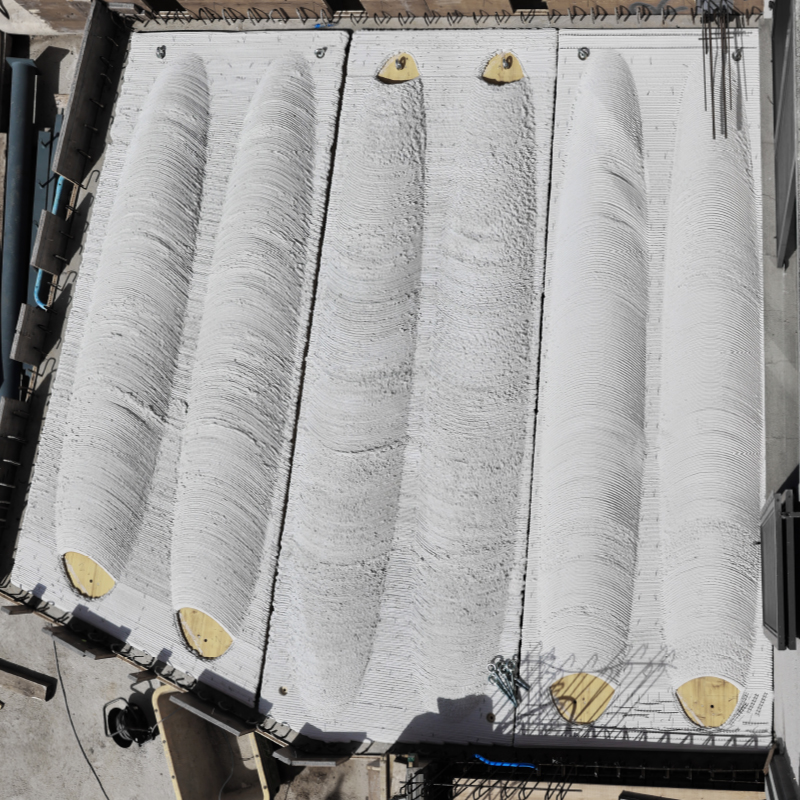
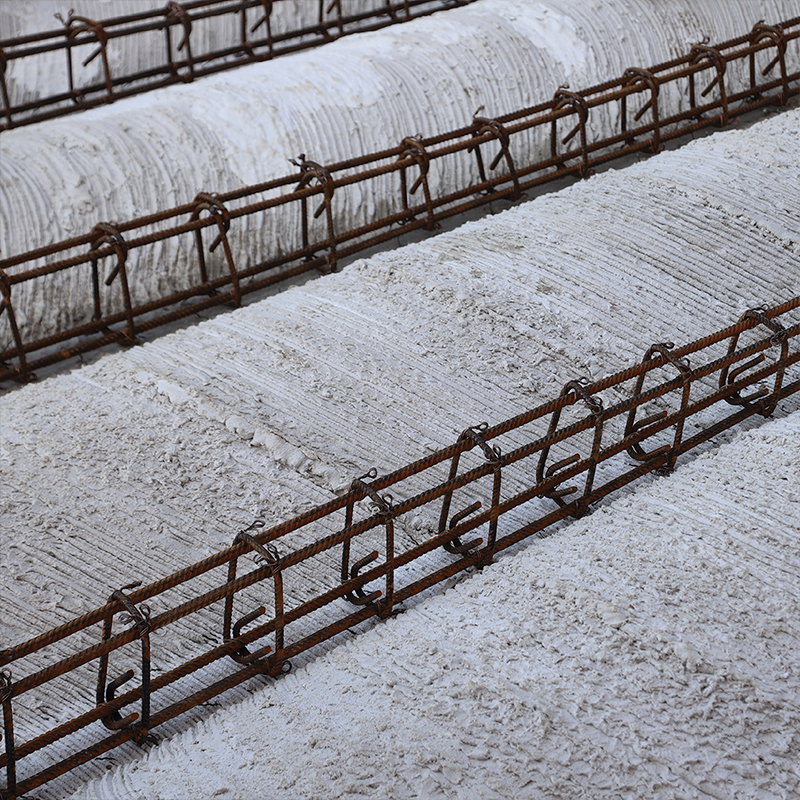
The Nubian Slab is a real-world 3D-printed structural concrete element for a residential building in Zürich. The vaulted slab proposes an innovative material-efficient construction method based on digitally fabricated thin shell stay-in-place concrete formworks. The method targets structural slabs, which contribute up to 60% of concrete consumption in architectural applications. The fabrication process is based on the ancient Nubian vaults. These roof structures feature self-supporting inclined masonry courses that can be built without temporary support. This traditional building technique inspired the proposed layered concrete extrusion process, with the 3D-printed concrete layers being analogous to Nubian brick courses. The key difference to conventional 3D concrete printing is the inclination of the extrusion layers, allowing shallow vaults to be produced suspended in thin air without additional supports. The paper presents the robotic 3D-printing setup with a custom nozzle, the fabrication-informed design considerations, and the current limitations of the process, focusing on the case study of a 16 m2 Nubian slab with an irregular perimeter installed in a residential building. Based on this case study, the paper outlines a comprehensive construction sequence for Nubian slabs, considering discrete prefabricated 3D-printed Nubian formworks, assembly details, reinforcement strategies, functional integration, and in-situ monolithic casting. The proposed 3D-printed Nubian slab system enables innovative material-efficient architectural design solutions that may accelerate construction times on site, facilitate mass customisation, automation and integration, and enhance structural performance while remaining compatible with traditional building practices.
Research Team
Ana Anton, Andrei Jipa, Benjamin Dillenburger (Digital Building Technologies), Lukas Gebhard (Concrete Structures and Bridge Design)
Architecture
Baier Bischofberger GmbH
Technical Support
Tobias Hartmann, (Digital Building Technologies), Philippe Fleischmann, Andreas Reusser.
Photo/Video
Andrei Jipa (Digital Building Technologies).
This research was supported by the NCCR Digital Fabrication, funded by the Swiss National Science Foundation (NCCR Digital Fabrication Agreement #51NF40-141853).
 antonreiter.com